

The Challenge
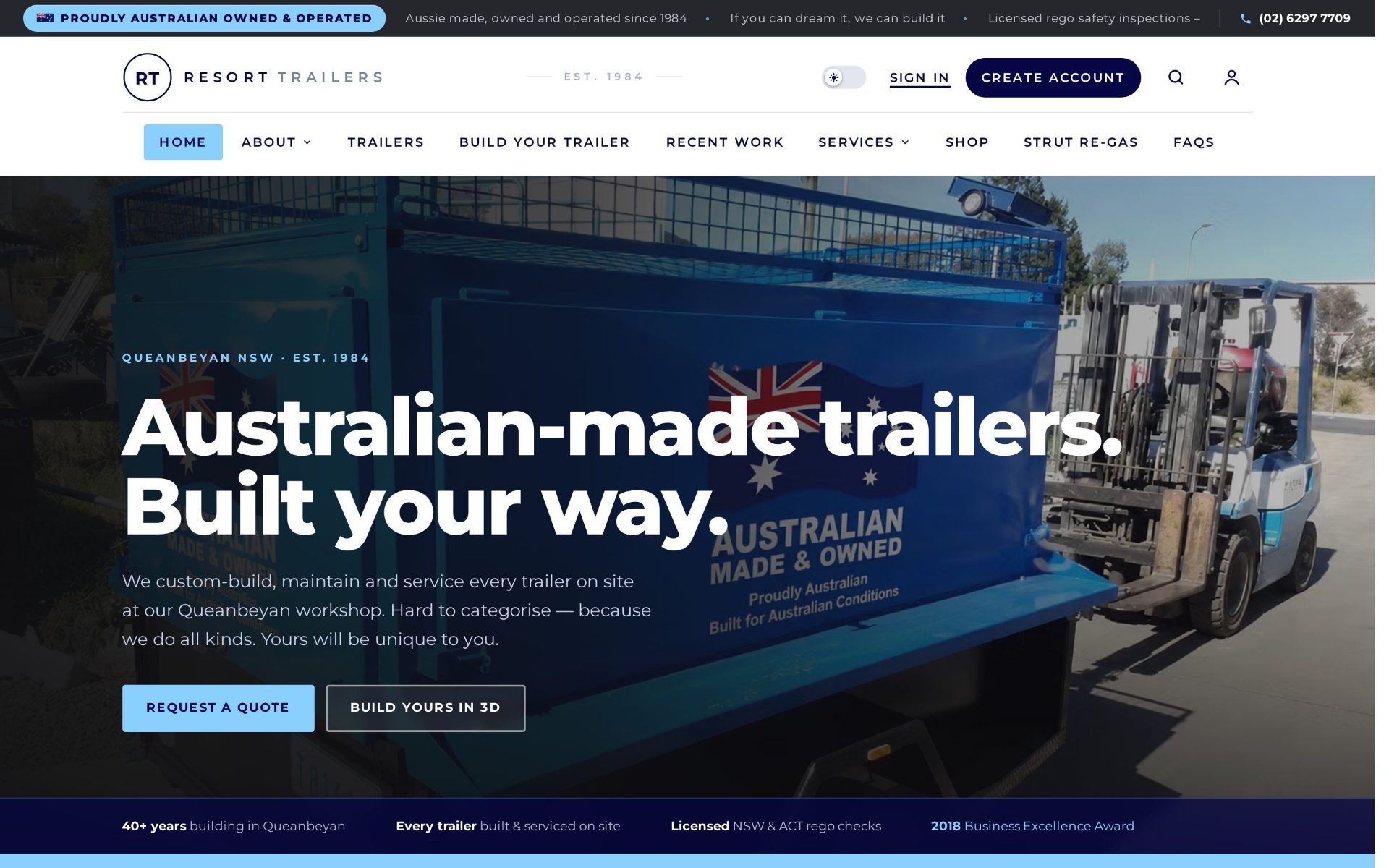
Resort Trailers builds box, cage, camper, tipper, tradie and off-road trailers to order, and has done since 1984. The reputation was never the problem. The website was.
It ran on Webflow, which meant the business paid a subscription every year for the privilege of having its own site, and stopping payment meant losing it. Nothing on the site could be changed without going back through a provider. For a manufacturer whose entire market is people searching for a specific type of trailer near Canberra and Queanbeyan, that is an expensive way to stand still.
There was a second, quieter problem. Twelve trailer-type pages were carrying the organic search traffic, and they had been indexed for years. Any rebuild that changed those URLs would have handed that traffic back to competitors on launch day. Migrations lose rankings far more often than they lose content.
What We Built
The site was rebuilt from scratch as a static Astro build, served from the client’s own cPanel hosting with DNS on Cloudflare and an auto-renewing Let’s Encrypt certificate. There is no platform subscription underneath it any more, and no provider standing between the business and its own pages.
A migration that kept the rankings
Before anything was switched over, every URL the old site published was inventoried and given a destination. The pages that mattered were not moved at all.
- All 18 published URLs from the old site accounted for before cutover, none left to guess.
- The 12 /trailers/ pages kept byte-identical URLs, so the pages carrying the traffic never moved.
- The handful that had to change, including /about-us and /contact-us, were given permanent 301 redirects.
- The site was deployed and verified against the server by IP before DNS was pointed at it, so the switch itself was a formality.
The SEO groundwork the old site never had
The previous site published no sitemap and carried no structured data whatsoever. Search engines were being asked to work the business out from the page text alone.
- LocalBusiness structured data across every page: address, coordinates, opening hours, ABN, the 1984 founding date and the areas served.
- A human-readable sitemap page, linked from the footer of every page, so visitors and crawlers can both reach everything.
- Every trailer-type page retitled around what people actually search for, the trailer type plus Canberra and Queanbeyan, and kept short enough that Google shows the whole title.
- Meta descriptions rewritten to sit under the length Google renders, instead of being cut off mid-sentence.
Build Your Trailer, a 3D configurator
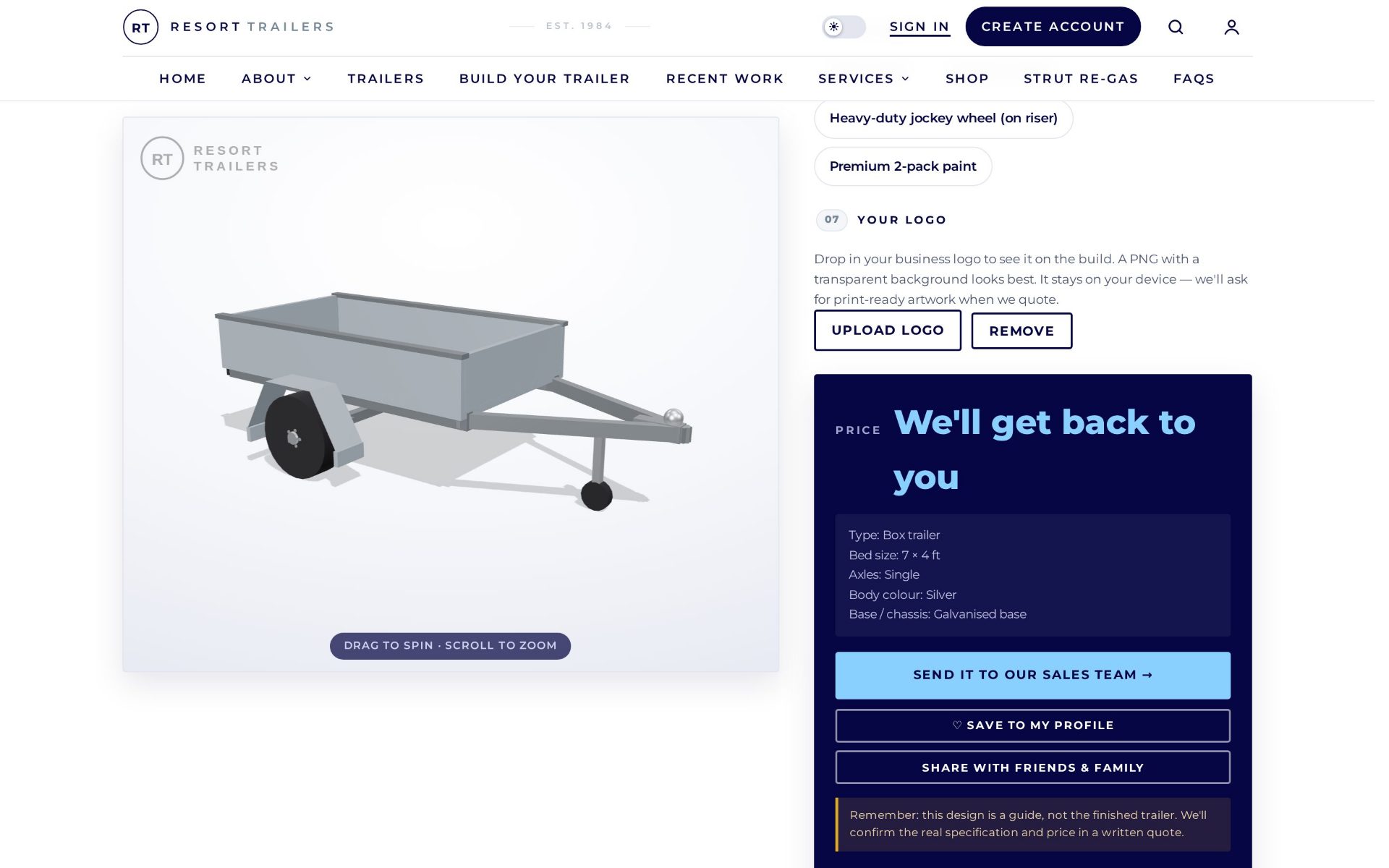
The headline addition is a configurator that turns "what would that cost?" into a specification the workshop can actually read. The customer builds the trailer on screen and watches it change as they go.
- A live 3D model that updates as body colour, chassis finish, size and extras are chosen.
- Body colour and base finish chosen separately, so a painted body on a galvanised chassis behaves the way it does in the workshop.
- Customers can upload their own logo and see it rendered on the trailer as a decal.
- A finished build can be saved and shared with a partner or a business co-owner before anyone commits.
- The completed specification arrives as an enquiry, so the quote that follows is priced against what the customer actually configured rather than a phone description.
A CMS, and enquiries that cannot go missing
- A Sanity content studio built into the site, so products, categories and settings are the client’s to edit.
- A bulk product import tool that matches on SKU, so a catalogue update is not a day of retyping.
- A site-wide enquiry form delivering to the business inbox, with the customer’s address set as the reply-to so a reply just works.
- Server-side logging on every send. The forms previously showed a success message even when the send had failed, which is the worst possible failure mode for a lead. An audit of the log confirmed nothing had actually been lost.
What It Means for the Business
The recurring platform fee is gone. The site is a set of files on hosting the business controls, and it does not stop existing if an invoice goes unpaid.
The organic search position the business had built up over years survived the rebuild intact, which is the single most common thing to lose in a migration and the hardest to win back.
The configurator does the work that used to happen over the phone. A customer who has already chosen a body colour, a chassis finish and a set of extras is a materially better lead than one asking what a trailer costs, and the workshop receives a specification instead of a description.
Why This Project Matters
A rebuild is the moment a business is most likely to quietly lose the search visibility it spent years earning, because the new site looks better and nobody checks the URLs until the traffic has already gone.
This project is the argument for treating the migration as the deliverable rather than an afterthought: inventory every URL, move the ones that earn nothing, and refuse to move the ones that do. The new site was the easy half.
Services Provided
Technology Stack
Frontend
- Astro (static output)
- TypeScript
- 3D trailer configurator
- Responsive & mobile-first
Content Management
- Sanity CMS, studio embedded in the site
- SKU-matched bulk product import
- Client-editable products & categories
Hosting & Delivery
- cPanel hosting owned by the client
- Cloudflare DNS
- Let's Encrypt auto-renewing HTTPS
- Resend transactional email